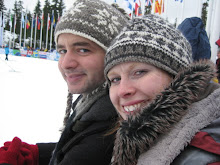
Originally this post would have been about moving to Shanghai. I had it all planned out: I was going to study Chinese at a university in Shanghai that has a large Chinese program for foreigners. The semester started at the end of February, and when it ended at the beginning of July I was going to finally return to America, together with Nissa. I would find an apartment upon arrival, having made appointments beforehand to look at several, and easily find part-time jobs teaching English to support myself. Tuition was expensive, I would have considerably more personal expenses including rent, and it would make my relationship more difficult, but I was determined to use my last few months in China to learn the maximum amount of Chinese that was possible. I'm also planning to take the HSK in June, a notoriously difficult exam to test the Chinese ability of non-native speakers. So in February I moved to Shanghai, took a good look around, and after three weeks I left.
Finding an apartment and my first job were not at all difficult, and I would learn a lot from my classes. But there many problems which I was not willing to overlook, mostly with the school. During my research I had heard many positive things about studying Chinese through a school--small, interactive classes that quickly improved your ability. With 15 hours of class a week, surely I would learn more than I could on my own. However, after our language tests at registration they put me in an intermediate class with 20 other students, mostly Korean and Japanese. Definitely larger than I wanted and expected.
In addition, the teaching methods were Chinese in all the worst ways. The teacher taught by painstakingly covering the textbook line by line, page by page, with many repetitive and dull vocabulary drills. The teachers spent a lot of time lecturing, and we had barely any time to practice speaking. Even in a three-hour "Spoken Chinese" class I don't think I was able to open my mouth and speak Chinese for more than two minutes, and quite a bit of class was time was listening to and being influenced by the mistakes of my classmates. The classes were also poorly coordinated--the Reading textbook was quite difficult, Listening suitable, and Speaking ridiculously easy. The textbooks were mediocre and uninspiring--dialogues and stories about making friends in the dormitory or moral lessons about why you shouldn't be lazy. Despite the school's receiving a huge amount of tuition from us (we were also overcharged for the textbooks), the only equipment in use besides chalk was a single tape player which didn't work. In over two years of learning Chinese it was the first time I was bored.
I also felt some disappointment with Shanghai, a city I had loved during my first visit as a tourist. Language practice was more difficult because the local people were much busier, less friendly, and much less impressed by foreigners in comparison to Zhangye. Many people either insisted in replying to me in English or didn't want to acknowledge that I was using Chinese, using hand gestures to answer my questions. I would have to work a lot of hours to cover my expenses, and commuting around the city was very time-consuming and exhausting, leaving me less time to study. And of course I missed Zhangye for its blue skies, superior food, low prices, and the friends I had made.
Luckily I had the option of getting a 70% refund (and I had only paid them half at that point) during the first two weeks of class, so I quit and made plans to return to Zhangye. Along with simply liking it here it is an excellent environment for Chinese self-study, and of course my girlfriend is still here finishing her teaching contract.
Upon returning, I had the problem of determining where to live, as of course I no longer have a school-provided apartment. It made the most sense to live with Nissa, but what would the school think about it? Our Miss Mao did find out, and summoned me into her office at the beginning of this week. I had no idea if she was going to kick me out or expect me to pay to move into my old apartment or what. It turns out she and the school don't care, but I have to simply go through the paperwork and be official.
I do still need to be part of some work unit or school to live in Zhangye, and studying Chinese in my living room doesn't quite cut it. So in classic Miss Mao fashion, she told me to write out an application--to study Chinese at Hexi University. So, to my great amusement, on paper I am Zhangye's first American "study abroad" student in the Chinese department of Hexi University. I'm tempted to attend Chinese department classes; maybe they won't notice me. I've been asked countless times in town if I'm a student in Zhangye, and finally I am.
Now that I don't actually teach at Hexi University it is easy to get a good two or three hours of study in during the day. I also have a private tutor, and am determined to learn just as much, spend less, and interact much more with Chinese speakers compared to Shanghai. On the side I tutor English and even teach Chinese to other foreign teachers. I also have a final chance to enjoy the wonderful local food. It feels good to be back.
Saturday, March 29, 2008


Monday, February 04, 2008
Yunnan and Hong Kong Travels
I've just completed almost a month of traveling with my girlfriend Nissa, and rather than writing a lengthy post about it, I thought I'd select a few pictures and just make some brief comments.


Not far from Lijiang lies Tiger Leaping Gorge, which boasts some of the most beautiful natural scenery I have ever seen. The first part of the hike was a strenuous 7 1/2 hour day that at times taunted our inadequate physiques.


A change of scenery and some long-awaited tropical atmosphere in Jinghong (景洪), southern Yunnan. It is the major city of the area known as Xishuangbanna (西双版纳), a taste of southeast Asia and minority culture not far from the Laos border.
 I'm often unimpressed by the food when traveling when I compare it to what I know and love in Zhangye, but Yunnan delivered. The cafes of Jinghong serve some delicious and unique Dai minority dishes.

In Xishuangbanna there is a Wild Elephant Valley, a protected area home to around 50 elephants. The entrance was a bit off-putting, with fake minority performances, a deer chained to a tree, and a bear in a muzzle for the entertainment of the tour groups. However, the jungle trail was pleasant and we anxiously awaited the possibility of seeing the elephants.

We opted to stay overnight in the unique tree houses in the middle of the jungle. It was remarkably peaceful, as we were the only visitors to stay there. The short and smartly-dressed hotel keeper told us that our luck must not have been good that day, as we had just missed some elephants who had come down to the pool. She promised to inform us if they spotted any more elephants.

After a short time, luck was with us. We saw the friendly hotel keeper racing up the stairs from the staff building on the ground towards our tree house. Two elephants had been seen, and she guided us down the path towards the spot. We watched in fascination as the mother and son, who were soon joined by the father, lounged in a muddy pool and drank their fill for an hour or so. The father had a less than graceful moment while attempting to walk across a thin tree trunk, and fell hard onto his stomach. Eventually they crashed their way back into the woods, but we spotted them again in the pool beneath our tree house as it became dark. We watched and listened for a long time but they were still out there drinking when we went to bed. It was certainly one of the highlights of the trip. If you get a little outside of Jinghong or any of the other small cities in the area, it is a good opportunity to see some of China's minority cultures still living a fairly traditional lifestyle. The dominant group of the area is the Dai (傣族). Traditional Dai houses, far and away more appealing than the gray and lifeless modern housing of Chinese cities, generally are supported on stilts so that livestock (or apparently in some cases, a car) can be stored underneath the home.
 The Dai are Buddhists, and their temples bore a strong resemblance to those I had seen in Thailand and Cambodia.

On our last day in Jinghong, we decided to go for one last bike ride outside the city in search of Dai villages. As luck would have it, a local Chinese high school boy with the English name Alan was renting a bike at the same time as us and was happy to become an improvised guide to the area. He took us to some villages that were closer than we expected and that we had already completely overlooked, and we were invited into the home of his Dai classmate in the first village. The room we saw was quite simple and without furniture or electric light, though we were given low stools and there was a television and refrigerator, neither in use. We took Alan to dinner as thanks at the end of the day. We were reluctant to leave the Banna area, and we disliked the next brief destination, Guangzhou, in almost every way (other than its free delivery Papa John's pizza). Actually, we didn't really see the city, as we spent the day frantically organizing our onward transportation. China has been hit by its worst winter weather in 50 years right at the time when the whole country goes home to celebrate the Chinese New Year, which has spelled a disaster of such proportions that it's gotten decent coverage in the Western media, even the cover of Time Magazine. At the time we didn't know anything about this, and were surprised to find a scene at the train station resembling a refugee camp in a war zone. Later when we read the Chinese news we saw Guangzhou's train station specifically mentioned as holding 150,000 or more migrant workers who were spending days there waiting for the chance to go home to see their families. We worked it out, but unfortunately for my budget it involved plane tickets.
We found Macau, on the other hand, to be an extraordinarily likable and unique city. Its years as a Portuguese colony (under more harmonious circumstances than long-time British colony Hong Kong, it seems) have given it a pleasant European feel and lovely architecture, churches in particular. Though an expensive destination by our standards (it's also a massive gambling center increasingly on par with Las Vegas), the food was good and the city unusually clean and organized. It was a fun place to simply walk around, window shop, and enjoy free samples from the bakeries.


 Unique incense sticks at a temple dedicate to the sea goddess A-Ma.

Our last destination was Hong Kong. It was a good choice for the last stop in that it's an exciting, world-class city that we had looked forward to seeing, but bad in that it was outrageously and stupendously expensive on our Zhangye salaries. The highlight for me was a fantastic Cantonese restaurant we stumbled into randomly. I never thought eel could be so delicious. Coming from the mainland, Hong Kong is shocking in its cleanliness, level of organization, diversity, and English ability. A bizarre thing happened every time we paused on the street while trying to find something: a local would immediately stop and assist in flawless English, oftentimes physically taking us to where we wanted to go to make sure we found it. This happened no less than 10 or 12 times, and when in doubt we learned to stop, look confused, and wait. This never happens on the mainland, where locals and even those in the service industry tend to be impressively ill-informed and though often friendly, will never approach you on the street on the (very reasonable) assumption that you don't speak any Chinese. As neither of us speak a word of Cantonese, we were able to take a break from Mandarin and enjoy being a world of fluent English again. Unfortunately for the earnest mainland English students who eternally ask us "how can I improve my English?", the best answer seems to be "let your city become the colony of a Western power for 150 years or so."


A familiar face in Chengdu.

About two weeks were spent in Yunnan province, including Lijiang, renowned for its picturesque streets, surrounding mountain scenery, and unique Naxi minority culture. It is getting a bit Disney Land-esque and is a shadow of its former self (as evidenced by reading Peter Goullart's fantastic Forgotten Kingdom), but still an enjoyable visit.


Not far from Lijiang lies Tiger Leaping Gorge, which boasts some of the most beautiful natural scenery I have ever seen. The first part of the hike was a strenuous 7 1/2 hour day that at times taunted our inadequate physiques.


The view from our guesthouse. US$15 for a pleasant double room on a mountaintop. The second day of hiking was much shorter and less exhausting than the first.

A change of scenery and some long-awaited tropical atmosphere in Jinghong (景洪), southern Yunnan. It is the major city of the area known as Xishuangbanna (西双版纳), a taste of southeast Asia and minority culture not far from the Laos border.
 I'm often unimpressed by the food when traveling when I compare it to what I know and love in Zhangye, but Yunnan delivered. The cafes of Jinghong serve some delicious and unique Dai minority dishes.
In Xishuangbanna there is a Wild Elephant Valley, a protected area home to around 50 elephants. The entrance was a bit off-putting, with fake minority performances, a deer chained to a tree, and a bear in a muzzle for the entertainment of the tour groups. However, the jungle trail was pleasant and we anxiously awaited the possibility of seeing the elephants.

We opted to stay overnight in the unique tree houses in the middle of the jungle. It was remarkably peaceful, as we were the only visitors to stay there. The short and smartly-dressed hotel keeper told us that our luck must not have been good that day, as we had just missed some elephants who had come down to the pool. She promised to inform us if they spotted any more elephants.


After a short time, luck was with us. We saw the friendly hotel keeper racing up the stairs from the staff building on the ground towards our tree house. Two elephants had been seen, and she guided us down the path towards the spot. We watched in fascination as the mother and son, who were soon joined by the father, lounged in a muddy pool and drank their fill for an hour or so. The father had a less than graceful moment while attempting to walk across a thin tree trunk, and fell hard onto his stomach. Eventually they crashed their way back into the woods, but we spotted them again in the pool beneath our tree house as it became dark. We watched and listened for a long time but they were still out there drinking when we went to bed. It was certainly one of the highlights of the trip.
 If you get a little outside of Jinghong or any of the other small cities in the area, it is a good opportunity to see some of China's minority cultures still living a fairly traditional lifestyle. The dominant group of the area is the Dai (傣族). Traditional Dai houses, far and away more appealing than the gray and lifeless modern housing of Chinese cities, generally are supported on stilts so that livestock (or apparently in some cases, a car) can be stored underneath the home.
 The Dai are Buddhists, and their temples bore a strong resemblance to those I had seen in Thailand and Cambodia.
On our last day in Jinghong, we decided to go for one last bike ride outside the city in search of Dai villages. As luck would have it, a local Chinese high school boy with the English name Alan was renting a bike at the same time as us and was happy to become an improvised guide to the area. He took us to some villages that were closer than we expected and that we had already completely overlooked, and we were invited into the home of his Dai classmate in the first village. The room we saw was quite simple and without furniture or electric light, though we were given low stools and there was a television and refrigerator, neither in use. We took Alan to dinner as thanks at the end of the day.
 We were reluctant to leave the Banna area, and we disliked the next brief destination, Guangzhou, in almost every way (other than its free delivery Papa John's pizza). Actually, we didn't really see the city, as we spent the day frantically organizing our onward transportation. China has been hit by its worst winter weather in 50 years right at the time when the whole country goes home to celebrate the Chinese New Year, which has spelled a disaster of such proportions that it's gotten decent coverage in the Western media, even the cover of Time Magazine. At the time we didn't know anything about this, and were surprised to find a scene at the train station resembling a refugee camp in a war zone. Later when we read the Chinese news we saw Guangzhou's train station specifically mentioned as holding 150,000 or more migrant workers who were spending days there waiting for the chance to go home to see their families. We worked it out, but unfortunately for my budget it involved plane tickets.
We found Macau, on the other hand, to be an extraordinarily likable and unique city. Its years as a Portuguese colony (under more harmonious circumstances than long-time British colony Hong Kong, it seems) have given it a pleasant European feel and lovely architecture, churches in particular. Though an expensive destination by our standards (it's also a massive gambling center increasingly on par with Las Vegas), the food was good and the city unusually clean and organized. It was a fun place to simply walk around, window shop, and enjoy free samples from the bakeries.


 Unique incense sticks at a temple dedicate to the sea goddess A-Ma.
Our last destination was Hong Kong. It was a good choice for the last stop in that it's an exciting, world-class city that we had looked forward to seeing, but bad in that it was outrageously and stupendously expensive on our Zhangye salaries. The highlight for me was a fantastic Cantonese restaurant we stumbled into randomly. I never thought eel could be so delicious. Coming from the mainland, Hong Kong is shocking in its cleanliness, level of organization, diversity, and English ability. A bizarre thing happened every time we paused on the street while trying to find something: a local would immediately stop and assist in flawless English, oftentimes physically taking us to where we wanted to go to make sure we found it. This happened no less than 10 or 12 times, and when in doubt we learned to stop, look confused, and wait. This never happens on the mainland, where locals and even those in the service industry tend to be impressively ill-informed and though often friendly, will never approach you on the street on the (very reasonable) assumption that you don't speak any Chinese. As neither of us speak a word of Cantonese, we were able to take a break from Mandarin and enjoy being a world of fluent English again. Unfortunately for the earnest mainland English students who eternally ask us "how can I improve my English?", the best answer seems to be "let your city become the colony of a Western power for 150 years or so."


Tuesday, December 25, 2007
Letters to Santa
During a recent Christmas lesson, I asked students to write a letter to Santa Claus. I explained that children in the West write letters to Santa to tell him what they want for Christmas, and why they deserve it. I expected some simple and not especially interesting letters asking for things like mp3 players, and some were like that, but many had a uniquely Chinese-student approach to the letter. For example:
I liked the fact that so many students asked Santa how his life was, and that so many of them thought first of what their family needed. In the west we have an impression of Chinese having very strong family values and in my experience it is most definitely true. Probably one of the most striking things to a westerner about Chinese students is their sincerity and lack of cynicism, which is all the more apparent when they are using English. The average westerner is usually exposed to China through the occasional news story, mostly unflattering ones, and I often wish this could be balanced with exposure to the more undramatic, low-key and endearing side of China and its people.
Have a Merry Christmas.
Dear Santa,
I can't touch with you a long time, I don't know how to do recently. Forgiven me and I think you study hard to pass exam. The Christmas is coming, I wish you are very happy and get a lot of gifts of your parents and your best friend. There are not lots of gifts in my town so I can't send gifts of you. I will bring best wish of you. Happy Christmas!Your best friend Hank
Dear Santa:
I know my wish is simple but it couldn't be put into my sock. I wish my grandmother has a healthy body and a happy smile like you. Thank you! Others said Santa is a tie [lie] But I believe you're always staying around us.Your Pupu
Charistmas will come but I am not happy. I have a trouble. I have not a good gift to give my gf. I am worry about it. Can you help me? I need it very much. Happy Charistmas!yours Andy
Dear Santa,
The Christmas will be coming. I have some whishes want come true and I believe you can help me to get them. Because you are very kindly and friendly, aren't you? I want to have a very good thing to protect my father's knees and a beautiful coat for my mother and some delicious bread for grandparents. They are soft for the teeth.
Oh yes, I only want to have a new cotton-shoes! Ha-ha! I believe you can.
Seriously,
Sabrina
Dear Santa:
Merry Christmas to you! I hope everyday is happy like today. I want to have a pair of shoes that keep warm and beautiful. Because the weather is very cold. My mother walks long time to work everyday, her feet often cool and pain. So I want to a pair of shoes that can keep warm for my mother. Please realise my dream. Best wishes for you.
Yours: Candy
Dear Santa Claus,
I am a boy who worry about all the thing happened in daily life, I don't know how to manage it completely. Especially, in the respect of emotion, I love a girl, but I don't know how much she love me, how to get her heart, head and heel. I don't know how to make her happy. I need some advices on it.
I don't know how to cope with the relationship between career and emotion. I can't control it easily. So I am very doubtful about it: St. Nicholas, you are the cleverest in the world. Can you tell me the best way to do it. I always think about it. It makes me nuts. I can't calm down. I think I will go crazy. Saint, please tell me what I should do. Finally, I give my best wish to you.
a boy
I liked the fact that so many students asked Santa how his life was, and that so many of them thought first of what their family needed. In the west we have an impression of Chinese having very strong family values and in my experience it is most definitely true. Probably one of the most striking things to a westerner about Chinese students is their sincerity and lack of cynicism, which is all the more apparent when they are using English. The average westerner is usually exposed to China through the occasional news story, mostly unflattering ones, and I often wish this could be balanced with exposure to the more undramatic, low-key and endearing side of China and its people.
Have a Merry Christmas.
Monday, December 17, 2007
AIDS Lesson


Recently I gave a lesson to my freshman classes about AIDS, as that was the topic of the homework reading. AIDS and related topics like sex and drug use are not exactly common conversation topics in China; other than Little Ma's crude sense of humor, I can't recall a single time I've heard a Chinese person mention sex in the past two years. Seeing as the word "girlfriend" is enough to get giggles from a class, I was curious how my students would respond to the lesson.
My first surprise was how little they learn about AIDS growing up. When asked, some students said they learned a little about it in school, but many said they didn't learn about it at all. So I asked if parents talk about it and there was a loud, resounding "no." I asked if there is sex education in school, and apparently there is none. I again asked if they learn about it from parents, and there was an even louder, unanimous "NO." One girl said aloud "that's impossible." I asked how they learn about sex, and after a pause a few students said "from the TV" or "from the Internet." I know the government provides AIDS education (in fact the only two posters adorning the faded and cracking walls of my classroom are about AIDS, including the first photo above, taken by my brother Erik while in Zhangye) and an AIDS day is promoted on December 1st, but it seems AIDS education in China is not quite where it could be. Many Chinese believe you can get it from mosquitoes, for instance.
During the lesson, which I actually borrowed from another teacher, the students had to separate a number of activities into the categories of "high risk," "low risk," or "no risk" for HIV. For example, "sharing a toilet" or "kissing" should go under "no risk" while "intravenous drug use" and "from mother to infant" should be placed under "high risk." The homework was very informative about HIV/AIDS and they overall did very well with this. One of the activities included was "oral sex" (low risk). Many students asked me what this meant, which was probably one of the more awkward things I've had to do in the classroom. Not knowing the Chinese word and not wanting to get too graphic, I simply said "sexual activity using the mouth... if you don't know what I'm talking about, ask a friend." In one class a girl said in Chinese, a little too loudly, wo mei zuoguo! - "I've never done that before!"
There was also group work during the lesson that had the students discussing HIV/AIDS-related issues. One of the questions asked if HIV testing should be required for certain jobs. While answering this question, one girl told me in a quite serious, deadpan voice "yes, I believe HIV testing should be required for some jobs, especially whores."
I also learned from my students that testing for HIV is not common in China, as there is a stigma attached to it. If you get tested for HIV others around you assume you have it, and will avoid you. I've since read that those diagnosed with HIV also may be ostracized, even to the point of their family refusing to eat with them or doctors refusing to touch them. Condom use is not universal, as it is associated with promiscuity. Until 2003, condom advertisements were illegal in China, and one survey found that 60% of Chinese condoms are faulty. Needles are also sometimes reused in China, even in hospitals.
At the end of the lesson, I gave students the chance to write down any questions they had about HIV and AIDS or the day's lesson. A few examples:
Are there a great number of students having the sex innections [I think they meant "intercourse"] with the different sex in American?
Is it possible for them to suffer from HIV if two lovers have sex without using condoms?
This is the first time I heard someone talk about sex in the public. I being to realize the importance of sex.
Use a condom weather have a side effect?
I think though China is a feudalist society, when children are thirteen or fifteen it's time for parents to teach them something about sex, and to teach them how to make friends with boys or girls, or what to do to protect themselves.
Can you give a kiss to a girl if she is infected with HIV?
Once someone had HIV, did they have the equal rights to do what they want to do? Like go to school, contribute to the society. If the others, especially their relatives didn't understand them.
In America, when students grow up a adult, their parents are encourage (or allow) them to sex with somebody. Is it true?
Our country passed a law, people can get married during their university. Do you think AID will spread faster?
In American, are old people frightened with AIDS?
Is it common that in USA, the middle school students having a sexual experience?
In China, if you want to test HIV or AIDZ, you are thought a patient who get infected HIV. Many people around you will be away from you. I want to know what do the American people think about?
I heard there are many people having HIV in America. Is it true? Does the government find the better method to control the AIDS?
When did the first HIV appeared? Why did he have HIV? Did he has too much freedom to infect HIV?
In your country female's virgin is concerned a lot, isn't it? In college, if you allow to married with somebody? In America, what's the average age people get married?
I remember when I told other Americans of my decision to go to China, there were mixed reactions. Many people, especially family and close friends, were enthusiastic and sometimes envious. However, many people had a negative and usually ill-informed reaction: "China has AIDS," "China is full of poverty," "they put people in jail for no reason," etc. My girlfriend at the time's immediate response to the idea was "China is full of AIDS." In China, AIDS is often associated with the West, and I once read a story about an American dating a Chinese girl whose mother's first reaction was to ask "does he have AIDS?" In truth, America does have the bigger AIDS problem, with more than 1,000,000 people infected with HIV, compared to China's 650,000 (China also has more than four times as many people). During the height of Maoism and China's isolation, parents in the countryside would tell naughty children that the foreigners would come to eat them if they didn't behave. While American parents were telling children to eat up because "there are starving kids in China," Chinese parents were telling their own children to eat well because there were oppressed capitalist children "starving in the West." It's funny how much I appreciate the importance of education now that I'm not actually in school.
Links:
HIV/AIDS in China
HIV/AIDS in America
Sex statistics by country
Sunday, November 18, 2007
Learning English the Manly Way
After close to two years I still love shopping in China. You never know what curious things await you. Case in point, from the children's section of a local bookstore:


It's not that we don't have war-inspired children's toys and merchandise in America (I remember owning a pack of Desert Storm trading cards myself) or America could be considered a pacifistic country at the moment , but the learning English theme is interesting. But hey, if "guided-missile submarine" inspires a child to learn a foreign language, I'm all for it.
There was also an earlier post at Sinosplice about the same subject.


It's not that we don't have war-inspired children's toys and merchandise in America (I remember owning a pack of Desert Storm trading cards myself) or America could be considered a pacifistic country at the moment , but the learning English theme is interesting. But hey, if "guided-missile submarine" inspires a child to learn a foreign language, I'm all for it.
There was also an earlier post at Sinosplice about the same subject.
Friday, November 16, 2007
Zhangye Rock City

Along with the English language, Western culture is making inroads in China. American movies, for example, are readily available on DVD in Zhangye and all over China. Many of the textbook readings for English students talk about Western countries and their culture and history. But one of the areas that I've felt is lacking is Western music. There are a few English songs popular in China, and a top five list would look something like this:
1. The Carpenters - Yesterday Once More
2. Michael Learns to Rock - Take Me To Your Heart
3. Celine Dion - My Heart Will Go On
4. Groove Coverage - God is a Girl
5. Emilia - Big Big Girl
Many Chinese students can sing these songs and any foreigner living in China will smile in recognition, but anyone reading this at home will think "huh?" Students are always surprised when I tell them the English songs they like are practically unknown in America (and no one would like them), and at home I haven't heard "My Heart Will Go On" for maybe 10 years.
Thus, this term I've made it my mission to introduce real Western music to the students. I wanted to start an English Music Club much earlier but never had a decent singer available to help out; this term my friend Stefanie is here, and "Zhangye Rock City" was started. Only 30 or 40 students show up per week, but we enjoy it and the students (mostly my freshman) are enthusiastic about it.
Picking songs is a little tricky, as they need to meet a lot of criteria: A) students will like the song B) we like the song, or at least don't mind it C) the words are sung very clearly, and not too fast D) there are not too many words E) the singing is not too low, as 90% of the students are female F) it was popular in the West, or at least can represent Western music. So as much I would love to go over a good PJ Harvey or Arcade Fire song, we stick to things like "The One I Love" by REM and "Last Kiss" as done by Pearl Jam. Last time we did "Do You Realize?" by The Flaming Lips. Chinese popular music tastes are quite firmly in realm of melodramatic love songs, so "Last Kiss" was particularly popular.
The way this works is we give the students copies of the lyrics, discuss the song, listen to it several times while singing along, and finally play it without the recording. Below are videos from music club of "Maps" by Yeah Yeah Yeahs and "Imagine" by John Lennon. The instrument that Stefanie plays is an American folk instrument called the Autoharp that she dragged all the way from California to northwest China. Suggestions for other songs to use in music club are welcome.
Monday, November 05, 2007
Just When You Thought You Knew Your Own Hair Color
The other day my friend Nissa was asked to visit a local middle school to observe a few classes and talk to the teachers about education in America. During one of the classes the Chinese teacher was leading a class discussion about Nissa, and at one point asked her in front of the class "what do you call your hair color in America?"
"Red" Nissa replied.
To her surprise, the teacher responded "no, no, it is blond hair. Your hair is blond."
"Well yes, we have blond hair in America, but we call this hair color red."
And a small argument ensued with the teacher insisting that Nissa has blond hair. This is not the first time she has been told she does not have red hair (for reference, she is the witch in the last post). In the case of the middle school teacher, I could be wrong (and I wasn't actually there at the time) but I think this is a good example of "face" (面子 miànzi) in Chinese culture. The dislike of making mistakes or being proven wrong is a lot stronger in Chinese culture (and east Asia in general I'm led to believe) than it is in Western culture, i.e. "losing face." It's a common mistake for students to call blond hair "yellow hair" and I can envision the teacher having emphasized this beforehand, waiting for her moment in class to bring the point home, and then not wanting to back down when she was proven wrong in front of the class. But even when face isn't at stake I've seen similar situations, like a conversation I once had with a student:
Student: "Foreigners have blue eyes. Why are your eyes black?"
Me: "Um, actually my eyes are blue."
Student: "No they aren't. Your eyes are black."
It's funny how stereotypes and preconceptions can be held on to even in the face of clear evidence. Nissa told one of her classes that most foreigners (and we are always "foreigners" in China, never Westerners) have the same eye color as them and they actually gasped in unison. When you want a job as a foreign teacher in China it is required that you provide the school with a photo of yourself; those with white skin, blond hair and blue eyes will get a job considerably easier than those with darker features (not only black people but, ironically, Chinese-Americans) regardless of qualifications. Non-white foreigners face a lot of discrimination and even fear in China (a black journalist wrote about a shop assistant bursting into tears at the sight of her) but most Chinese, having never met one, are entirely unaware of this and would strongly deny it.
Chinese conceptions of foreigners are always interesting. They are also sometimes shocking or insensitive, but you can't really blame them in a country that is 95% the same race, the same hair color, the same eye color, and is considerably more conformity-driven than Western culture. Look at how much discrimination and close-mindedness exists in America despite our enormous diversity and high levels of education and prosperity. I can recall several moments from college when my educated, liberal friends made shocking comments about black people. But as an example of what I mean (also from Nissa's class, which unlike mine deals directly with cultural differences), students were asked what the differences between China and America were and a student replied "in America people discriminate and look down on minorities, but in China we always help minorities." Another said "China has 55 minorities, but America only has black people and white people." Needless to say, I'm not so sure about that.
"Red" Nissa replied.
To her surprise, the teacher responded "no, no, it is blond hair. Your hair is blond."
"Well yes, we have blond hair in America, but we call this hair color red."
And a small argument ensued with the teacher insisting that Nissa has blond hair. This is not the first time she has been told she does not have red hair (for reference, she is the witch in the last post). In the case of the middle school teacher, I could be wrong (and I wasn't actually there at the time) but I think this is a good example of "face" (面子 miànzi) in Chinese culture. The dislike of making mistakes or being proven wrong is a lot stronger in Chinese culture (and east Asia in general I'm led to believe) than it is in Western culture, i.e. "losing face." It's a common mistake for students to call blond hair "yellow hair" and I can envision the teacher having emphasized this beforehand, waiting for her moment in class to bring the point home, and then not wanting to back down when she was proven wrong in front of the class. But even when face isn't at stake I've seen similar situations, like a conversation I once had with a student:
Student: "Foreigners have blue eyes. Why are your eyes black?"
Me: "Um, actually my eyes are blue."
Student: "No they aren't. Your eyes are black."
It's funny how stereotypes and preconceptions can be held on to even in the face of clear evidence. Nissa told one of her classes that most foreigners (and we are always "foreigners" in China, never Westerners) have the same eye color as them and they actually gasped in unison. When you want a job as a foreign teacher in China it is required that you provide the school with a photo of yourself; those with white skin, blond hair and blue eyes will get a job considerably easier than those with darker features (not only black people but, ironically, Chinese-Americans) regardless of qualifications. Non-white foreigners face a lot of discrimination and even fear in China (a black journalist wrote about a shop assistant bursting into tears at the sight of her) but most Chinese, having never met one, are entirely unaware of this and would strongly deny it.
Chinese conceptions of foreigners are always interesting. They are also sometimes shocking or insensitive, but you can't really blame them in a country that is 95% the same race, the same hair color, the same eye color, and is considerably more conformity-driven than Western culture. Look at how much discrimination and close-mindedness exists in America despite our enormous diversity and high levels of education and prosperity. I can recall several moments from college when my educated, liberal friends made shocking comments about black people. But as an example of what I mean (also from Nissa's class, which unlike mine deals directly with cultural differences), students were asked what the differences between China and America were and a student replied "in America people discriminate and look down on minorities, but in China we always help minorities." Another said "China has 55 minorities, but America only has black people and white people." Needless to say, I'm not so sure about that.
Subscribe to:
Comments (Atom)